Student Researchers Making an Impact Across Emerson
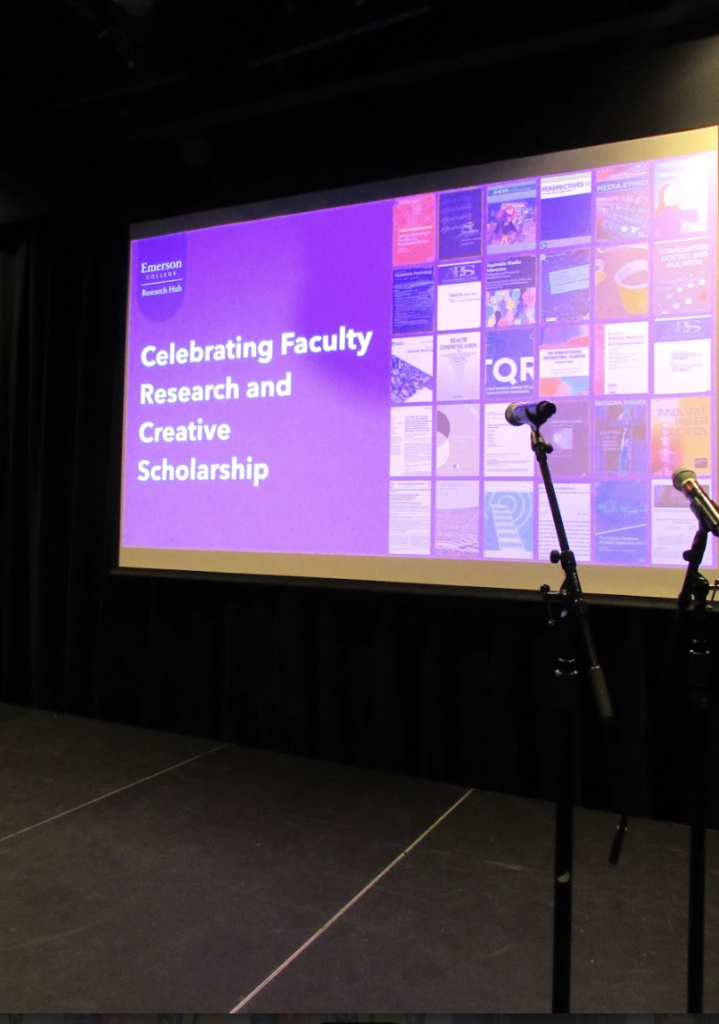
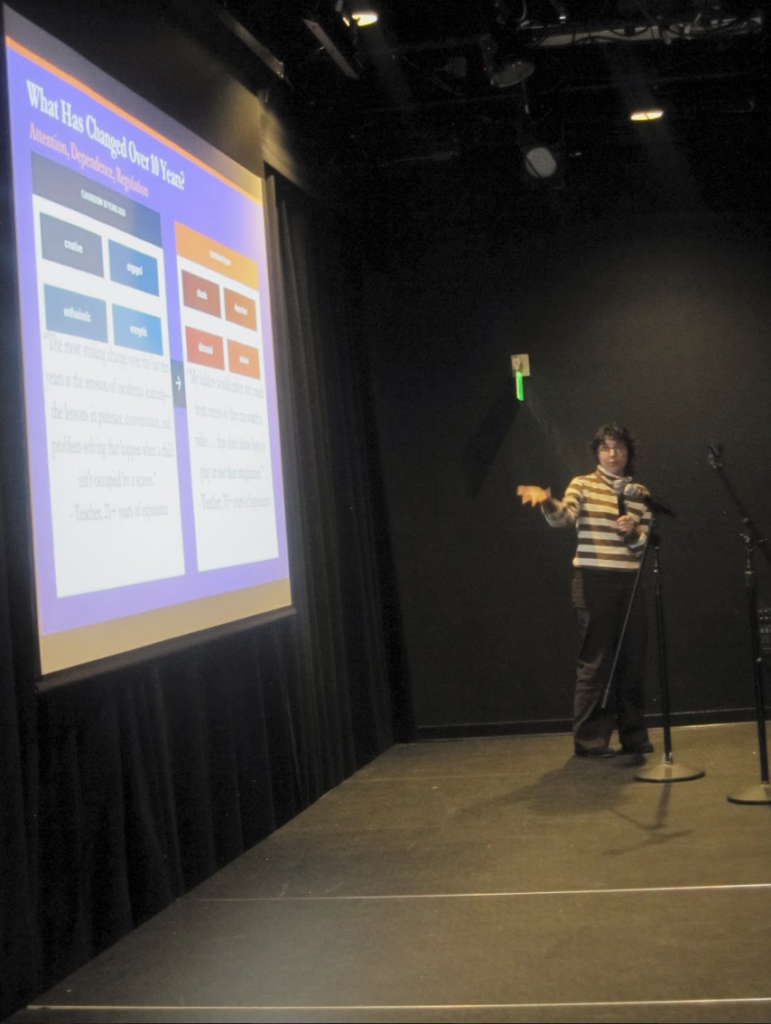
At the 2026 Celebration of Research hosted by the Research Hub on March 31, you may have noticed a number of student researchers presenting a variety of work. Briana Primavera (‘26), Avanika Lefcowitz (‘26), and Lyanna Zammas (’26) presented alongside faculty researchers during the lightning talks segment of the event and Tyler Cooper (’26), Lila Alonso Limongi (’26), Sheridan Robbins (’26), and Liying Wang (’29) presented poster displays, all providing insight into student passion and dedication to creative exploration at Emerson. Whether you are a student looking to expand your research skills or a professor looking for a helping hand, there are many research opportunities available across all disciplines at Emerson College.
The Undergraduate Co-Curricular Program through the School of Communication allows for students to gain hands-on research experience by working on a current faculty research project. Students can also participate in guided discussions with other mentees and faculty mentors to foster a broader understanding of research designs, methodologies, data analysis, and presentation formats. The 2025 student participants of this research program include: Briana Cordon (‘28), Makeighly dos Santos (‘26), Gray Gailey (‘27), Dana Guterman Levy (‘26), Abigail Lincks (‘26), Colleen McGrath (‘27), Martin Tran (‘25), Ella Scarpone (‘27), Kendal Kittredge (‘27), Sasha Bruk (‘26), Victoria Hodes (‘25), and Mohammad Omar Rasooli (‘25).
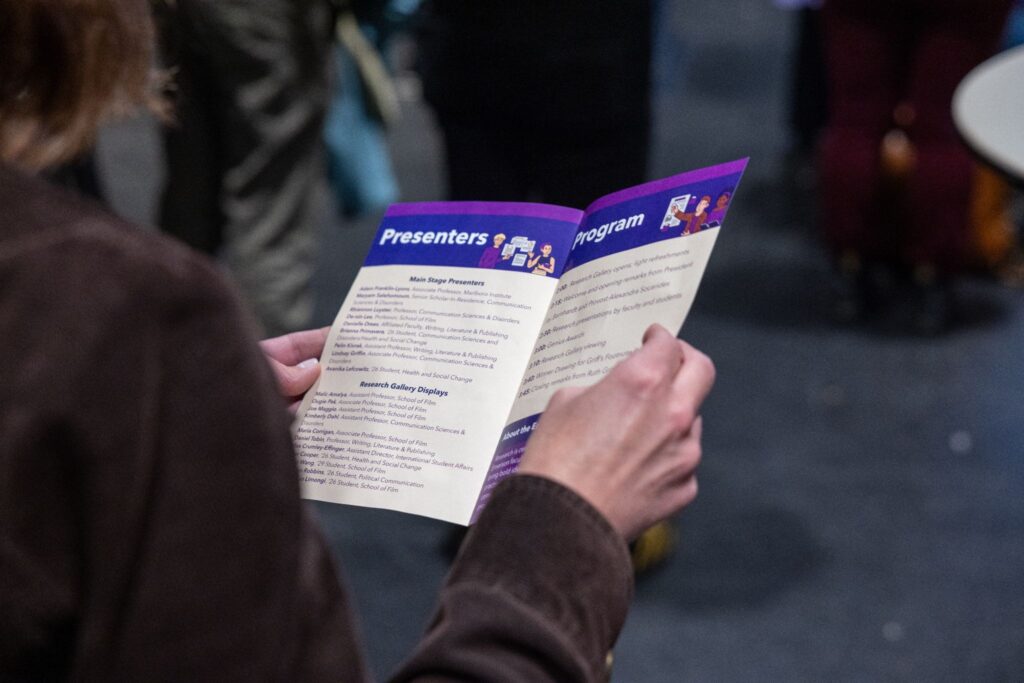
“My research assistants were involved in all aspects of the research process which included conducting academic research, designing the survey, developing the methodology, and interpreting the results,” said Owen Eagan, Senior Lecturer in the Communication Studies Department on his research project that examined how Bad Bunny’s music affects public perceptions of gentrification and gender-based violence in Puerto Rico.
Wyatt Oswald, Professor for the Marlboro Institute for Liberal Arts & Interdisciplinary Studies, worked with Yoshiko Slater (‘25) and Ella Mastroianni (‘25) on his research for his funded project surrounding the environment of the Arnold Arboretum, a 280-acre botanical preserve in Boston’s Jamaica Plain neighborhood, now managed by Harvard. Over the course of the students’ participation in the program, they gained experience in archival work and scientific storytelling.
“Yoshiko and Ella spent time in the Archives of Harvard’s Arnold Arboretum, exploring the papers of Charles Sprague Sargent, the owner of Holm Lea, and the first director of the Arnold Arboretum,” Oswald stated. “Yoshiko and Ella found a number of quotes and photos that we ended up using in an article we wrote about the project, published in Arnoldia, the quarterly magazine of the Arnold Arboretum.”
Matt Ollis, Associate Professor for the Marlboro Institute for Liberal Arts & Interdisciplinary Studies, is currently working on a graph theory (more specifically “Network Theory”) project with senior Ria Jiao (’26) on showing that various types of graphs have total prime labelings. “This is a mix of theory and computing and Ria is working on both, including being mostly responsible for writing the Python programs we are using.” Ollis is projecting to have results submitted to a journal by this summer.
Ollis stated, “Ria is going on to a data science masters and the Python skills she is learning here will be directly useful for that.”
The Graduate Research Assistantship (GRA) program is a partnership between the Graduate Student Association, the Office of Graduate Studies, and the Office of Research and Creative Scholarship that gives students hands-on research experience, strengthens analytical skills, and supports faculty research and scholarship. Chris Fong Chew (MFA ’26) served as a GRA for Professor Catherine Nguyen (Writing, Literature & Publishing), contributing to her book project: Children Born of War, Adoptees Made by War, which examines refugees of war with a focus on the American War in Vietnam. Chew conducted field-wide research on Children Born of War, analyzed key literary texts and scholarship, and assisted with course development and guest teaching.
Chew stated, “Working with [Professor Nguyen] deepened my knowledge in theory, literature, and also scholarship. Researching several papers on a multitude of topics allowed me to recognize key topics, names, and themes.”
Casey Schulkind, (MS ’26) worked in the LI+TLE Lab under Lisa Wisman Weil, collaborating with another graduate student on a language transcription and coding project. Using Boston Children’s Hospital researcher Susan Faja’s Lab of Cognitive Neuroscience’s parent-child interaction samples, they were able to finalize ten-minute language samples and engaged in consensus coding using the Unconventional Language Taxonomy developed by Luyster, Wisman Weil, and Zane (2022). The dataset is now being used by Wisman Weil to write a methods paper focused on the consensus-coding process using this taxonomy.
“Through my work in the LI+TLE Lab, I strengthened several key research and professional skills. I served as the liaison between Dr. Faja’s lab at Boston Children’s Hospital and our team, which helped me refine my professional communication and coordination abilities. I also became extremely familiar with the unconventional language coding taxonomy. This experience has directly supported my own graduate thesis work,” stated Schulkind.
Schulkind is using her experience in this program as a launching point for her graduate thesis work, expanding on her mentors’ research on autism in 2022, “My favorite part of the experience was building a strong and lasting professional relationship with my advisor, Dr. Lisa Wisman Weil. I’m confident that this mentorship will continue to influence and support my career well beyond my time at Emerson.”
Student research isn’t restricted to only the Emerson campus as students in the Department of Communication Sciences and Disorders present in conferences alongside their professors. From March 11-14, 2026, a contingent of twelve Emerson faculty, staff and graduate students in the Department of Communication Sciences and Disorders (including the Lab for Infant + Toddler Language (LI+TLE Lab) and the Facial Affective and Communicative Expressions (FACE) Lab) convened with nearly 200 other professionals at the third biennial Meeting on Language in Autism (MoLA). Student researchers at this conference include Cai Conners (BS ’23, MS’25), Grace Flanagan (MS ‘26), Lerato Mensah-Aborampah (MS ‘26), Casey Schulkind (MS ’26), and Gabriela Spizale (MS ‘26).
Gabriela Spizale (MS ‘26) got involved with Luyster’s research project while she was searching for a research assistant position at Emerson. “Coming into the program, I knew I wanted to be involved in research, and I was really drawn to the work happening in Rhiannon’s lab. Her focus on autism and early development especially aligned with my clinical interests.” Spizale has been working with her in the lab since September 2024.
Spizale was a poster presenter at MoLA, “Explaining our findings to a broader audience helped me better understand the clinical relevance of children’s interests. It also gave me new perspectives from other researchers, which made me think more critically.”
The Senior Capstone Project is driven by specific research questions, often taking on multiple forms in different media—a performance, an essay, poetry, film, sculptures, presentations, computer programs, etc.—and most have more than one component. Upon graduation, students will have not only completed a project of significant scale and depth, they will also have a portfolio of advanced work that clearly demonstrates the content of their learning and their degree.
In accordance with state and federal regulations, all projects conducted at Emerson involving human subjects must be reviewed and approved by the Institutional Review Board prior to the initiation of any investigation. Tarak Malhotra (‘25), Maya Nakkoul (‘25), Christopher Rogers (MA ‘25), Emily Schmid (MFA ‘26), Kennedy Van Cleve (‘26), Manuel Trujillo (‘26), Tyler Cooper (‘26), Briana Primavera (‘26), Avanika Lefcowitz (‘26), Sofia Olsson (‘26), Matthew Wilkinson, Emily Borges (MS ‘25), Sara Berliner (MA ‘25), Dana Guterman Levy (‘26), Skylar Hutcheon (‘25), and Gavin Miller (‘26) completed projects this year that were cleared by Institutional Review Board (IRB) for student researchers to complete with faculty assistance.
In recent news, Sara Berliner (MA ’25) received the American Alliance for Theatre and Education’s Distinguished Thesis Award for her thesis on eating disorder risk reduction for theatre educators.
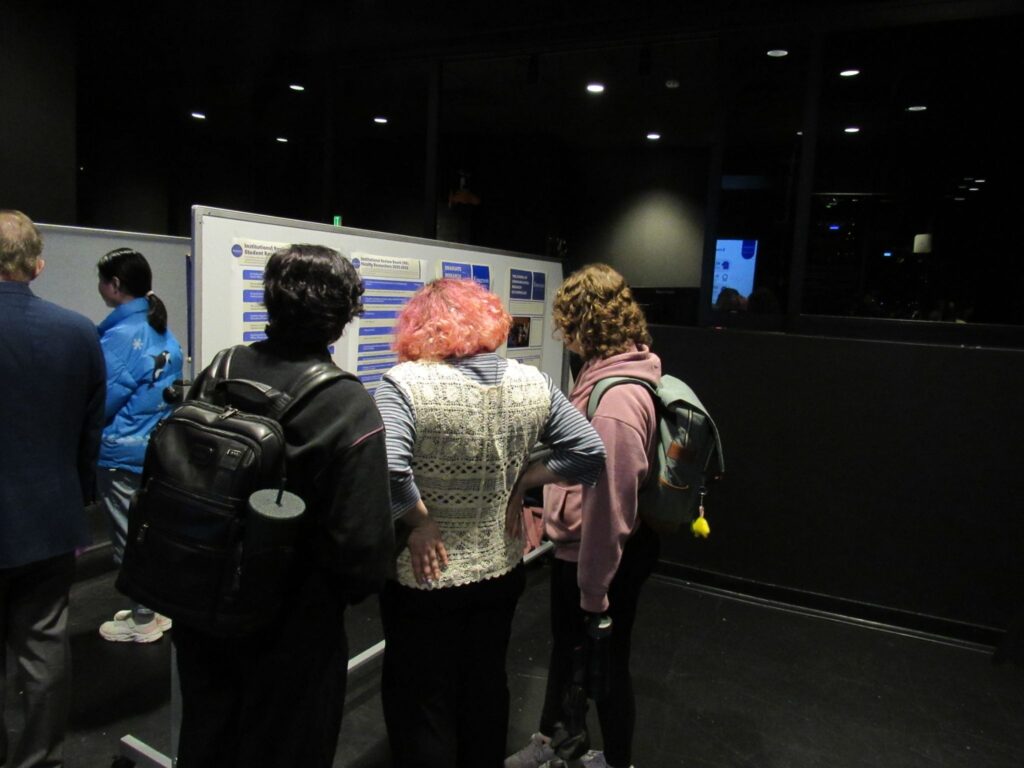
For those interested in being a student researcher at Emerson College, current students have helpful tips on searching for possible opportunities.
“I would encourage students to be proactive and reach out to faculty whose work aligns with their interests!” said Spizale, “Even if you don’t have prior research experience, showing curiosity and willingness to learn goes a long way.”
“My advice is to look into the research and background of the faculty member you hope to be a GRA for since I think it is most powerful when your academic interests align with the faculty you are a GRA for,” Chew stated. “I sought out to be a GRA for Catherine since I was interested in her background in Diasporic Vietnamese Literature, but learning more about related interests and fields was really fruitful for me.”