Engel Grants Support Seven Projects in Research, Ecology, and Creative Inquiry
This year marks the second round of Robert Engel Research Grants at Emerson College. Established through a generous $1.5 million bequest from the estate of Robert (Bob) Engel, the fund moved from Marlboro College to Boston and continues to support undergraduate research and experiential learning in biology, ecology, environmental studies, and related fields.
This year’s projects bring together Marlboro’s tradition of individualized, self-directed education in a rural campus setting and Emerson’s strengths in communication, the arts, and urban engagement. The projects span a wide range of interests, from tree-ring analyses to sustainability in theater, and from lakes in the Netherlands to bees in Boston, reflecting the interdisciplinary spirit of both institutions while honoring Dr. Engel’s passion for scientific inquiry and the natural world.
Nearly $21,000 was awarded to support seven student and faculty projects. The recipients highlighted below exemplify the creativity, curiosity, and hands-on learning that the Engel Fund was created to foster.
Mack MacIntyre ‘27, a junior in the Marlboro Institute of Liberal Arts and Interdisciplinary Studies, was awarded funding for the project “Environmental Sustainability in Technical Theater,” which sits at the intersection of sustainability, ecology, and the performing arts. Theaters function as complex ecosystems that consume resources, generate waste, and interact with the broader environment. This project examines how the Acadia Repertory Theater on Mount Desert Island, Maine operates across departments, including scenic construction, costume production, lighting, sound, and facilities management, to evaluate its environmental impacts and identify gaps in sustainability practices, inform recommendations for improving resource efficiency, reducing waste, and ultimately decreasing the theater’s environmental footprint while supporting more sustainable theater practices. Marlboro Institute Associate Professor and Director of Interdisciplinary Studies Major, Jaime Tanner, former Marlboro College faculty, will serve as the faculty advisor for this project.
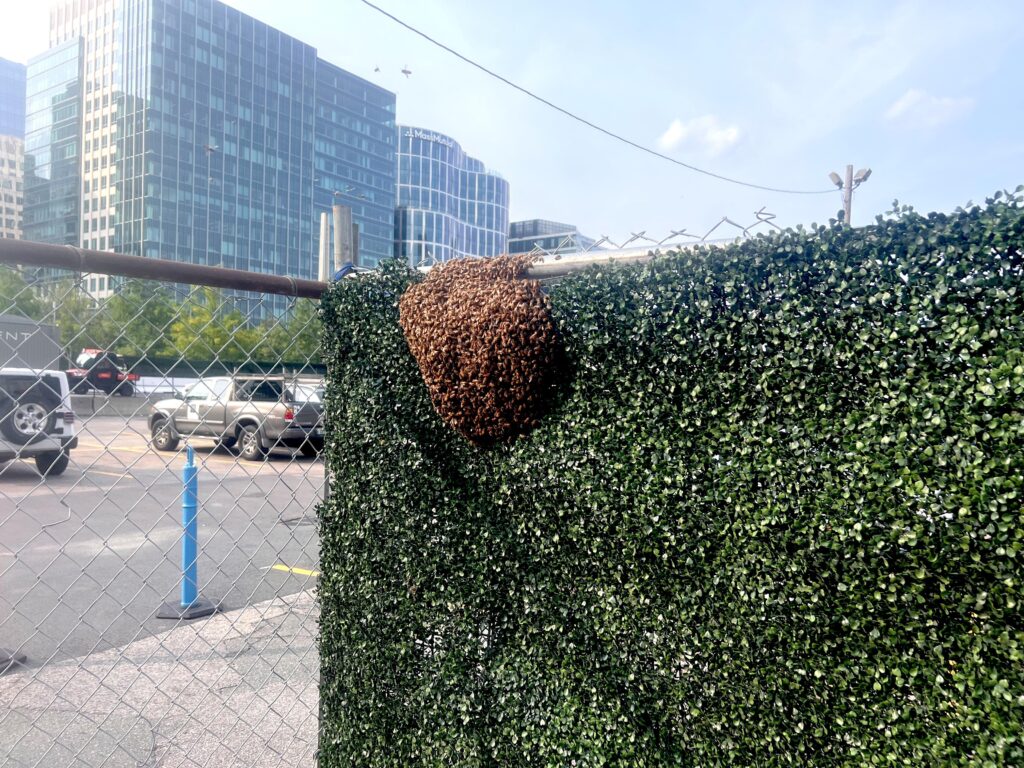
Hannah Miller ‘27, a junior in the Marlboro Institute of Liberal Arts and Interdisciplinary Studies was awarded funding for “Busy Bees,” a 20 minute audio visual research documentary project following Boston beekeeper Val Mayo as she delves into the hidden complexities of honeybee society, reminding us of their importance to our world. Korbett Matthews, Associate Professor in the School of Film, Television and Media Arts will serve as faculty advisor.
Ria Wipperfurth ‘27, a junior in the Marlboro Institute of Liberal Arts and Interdisciplinary Studies is part of the Interdisciplinary Studies BA program and will graduate with a self-designed major “Climate Sustainability in Business.” Her project, “Engagement in Sustainability Education Abroad,” is designed to develop her understanding of the intricate systems of permaculture, nature building, circular farming, renewable energy, and sustainable development. She plans to travel to Iceland to participate in Reykjavik University Iceland School of Energy’s Renewable Energy Innovation & Sustainability course. This experience will inform and deepen her academic major by strengthening her understanding of renewable energy, sustainability frameworks, and real-world approaches to addressing environmental challenges.Marlboro Institute Associate Professor and Director of the Interdisciplinary Studies Major, Jaime Tanner, former Marlboro College faculty, will serve as the faculty advisor for this project.
Todd Smith, Associate Professor in the Marlboro Institute and former Marlboro College professor of chemistry, biochemistry, human physiology, and molecular biology was awarded funding for his project “Science in the kitchen: a gateway to new understanding.” This project will provide students in two sections of Kitchen Chemistry and one section of the proposed Spring 2027 course Microbes Run the World with hands-on learning experiences at the Milk Street Cooking School. By treating the kitchen as a living laboratory, students will explore biological, ecological, and chemical processes that shape food systems, including microbial activity, fermentation, metabolism, nutrient transformations, and the interactions between organisms and their environments. These experiences will connect classroom concepts to real-world applications in biology, ecology, microbiology, and environmental science.
Jaime Tanner, Associate Professor in the Marlboro Institute and former Marlboro College biology ane ecology professor was awarded funding for her project “Animal Behavior Class Observations at the Franklin Park Zoo.” This project will support a field-based learning experience for students in SC313 Animal Behavior through a visit to the Franklin Park Zoo, where they will collect and analyze behavioral data from a diverse range of animal species. Animal behavior is a central component of biology and ecology, providing insight into how organisms interact with one another and respond to their environments. By observing animals directly, students gain a deeper understanding of the evolutionary, ecological, and physiological factors that shape behavior across species.
Wyatt Oswald, professor in the Marlboro Institute, was awarded funding for his project “Changing climate and treelines in the western US.” This research builds on an initial study of a high-elevation dead forest in northern Utah to better understand past treeline shifts and ecosystem responses to climate change. The project will expand radiocarbon dating to additional samples to refine the timeline of when these trees lived and how the treeline changed over time. Tree-ring analyses will be conducted at Emerson by Media Arts student Chloe Fadem ‘27 using a dissecting microscope and ring-width measuring system. By comparing ring patterns to regional chronologies, the study aims to produce more precise dating than radiocarbon alone allows, offering a clearer reconstruction of past climate-driven changes in high-elevation forests.
Marious Boldrik, Wouter Wolters, and Bianca Janssen Groesbeek, three Kasteel Well faculty, were awarded funding for their project “Polderen: Different Perspectives on the Transformations of the Natural and Social Environment of the Zuiderzee.” Polderen is a Dutch term meaning to discuss, negotiate, and build consensus, derived from polder, reclaimed land surrounded by dikes whose maintenance historically required collaboration and compromise. The “polder model” of consensus-building informs both the project’s interdisciplinary approach and its learning activities, which engage students with multiple perspectives on environmental and social change to foster dialogue and negotiation. Building on the first Polder excursion in October 2025 (also supported by an Engel’s Fund grant), this next phase will again bring students to the Noordoostpolder and Flevopolders, large areas of land reclaimed from the Zuiderzee and surrounding lakes, while integrating coursework in art, water science, and biological sciences at Kasteel Well in the Netherlands.
To learn more about the Robert Engel Research Grants Fund, please visit the Office of Research and Creative Scholarship (ORCS) web page.